
Table of Contents
Introduction
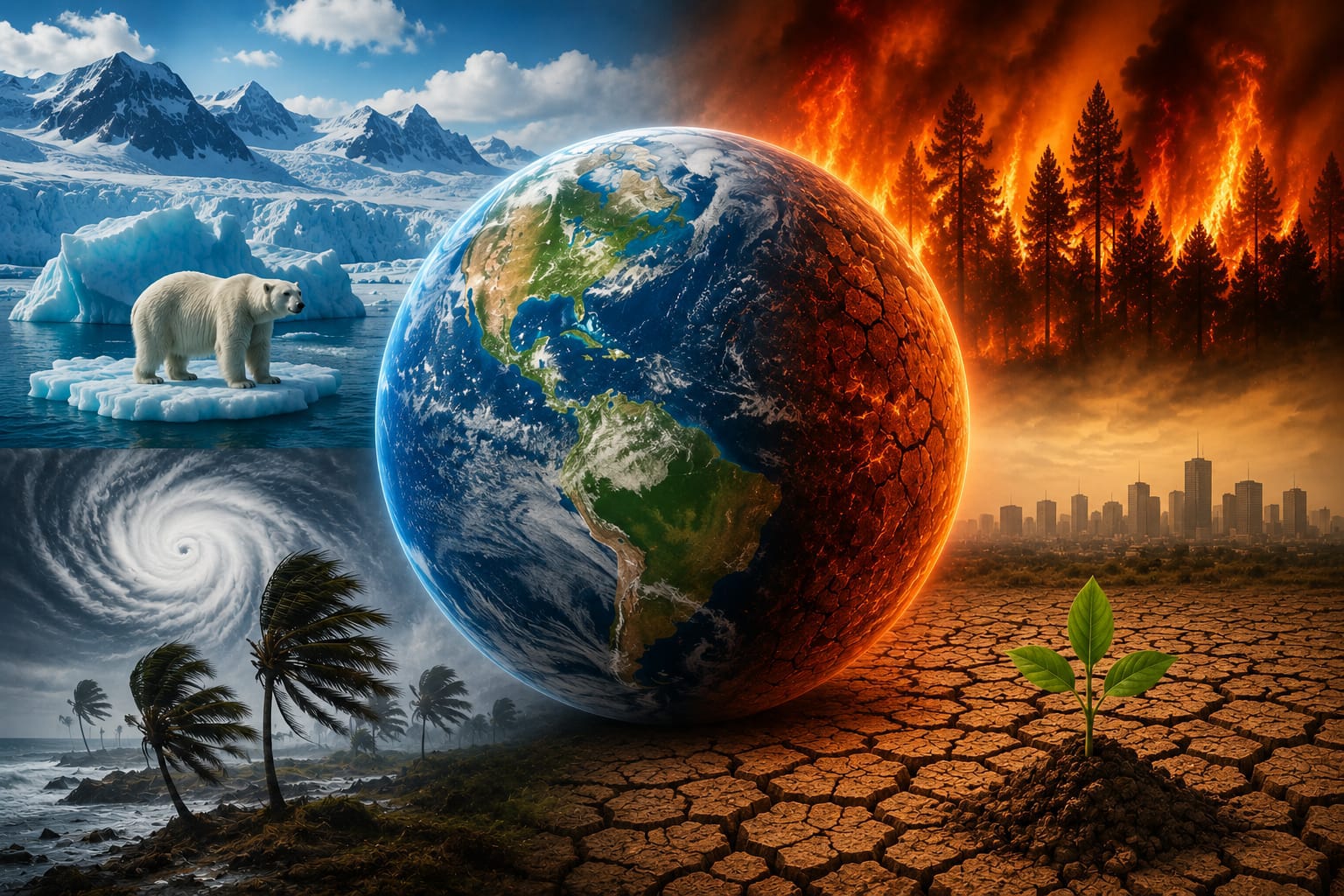
The world climate 2026 will continue to influence life. Climate change is impacting millions of people and ecosystems, including rising temperatures, stronger storms, extended droughts, devastating wildfires and record-breaking heatwaves. Events related to climate change are now occurring more frequently and intense, and efforts must be stepped up to combat the effects, scientists say.
From North America to Europe, Asia, Africa and the Pacific, governments and communities around the world are tackling the new environmental challenges and investing in clean energy, climate adaptation and disaster preparedness. Some of the top climate change headlines from around the world.
Record Heat continues for many areas.
The impact of climate change is still one of the most noticeable – extreme heat. Many countries have already recorded very hot weather in 2026 and as the El Niño continues to ramp up, scientists predict it could get even hotter in the coming week or so. Ocean temperatures were recorded and wide-spread heatwaves had health implications, affected electric power systems, and were a concern with water supplies.
The latest years have been the warmest on record, and are a clear sign of the climate warming trend over the last decades due to climate-warming greenhouse gases, according to reports of the World Meteorological Organization.
Canada continues to experience another wildfire season that is wreaking devastation on its forests, and the smoke is filling North American communities with as many acres of forest as have burned.
Global climate change over the past decade has been the subject of recent research, and this risk is being greatly exacerbated by the increased likelihood of these fires being hot, dry and windy. As temperatures rise, the number of forest fires may increase and they may be harder to put out and spread more quickly, experts say.
Increasingly, there is a need for strong climate policy and emergency readiness is back on the agenda due to the danger of wildfire.
Drought and heat waves occur in Europe.Dry periods and hot summers in Europe!
In many European countries extreme heat and water shortage/drought persist.
There have been heatwaves affecting the United Kingdom and the United Kingdom which has affected schools, agriculture, transport and hospitals. The impacts of the droughts on reduced crop yields are being observed by farmers, and both governments are turning to investing in climate change in the long-term to improve the resilience of farmers.
Wildlife is affected by Climate Change.
Climate change impacts on wildlife is not just affecting wildlife habitats, but people as well.
In 2026, a large-scale international study indicated a number of butterfly species have moved their ranges and/or altitudes in response to climate change. Butterflies are known as a canary in the coal mine—an indicator of the state of the environment—and indicator of other environmental changes occurring all over the world.
The importance of habitat protection and better biodiversity conservation is likely to grow with the increase of global temperature, researchers stress.
Climate researchers are closely observing the development of El Niño, a natural weather phenomenon, because it will impact the weather system of the world.
Besides long-term global warming, El Niño is likely to bring with it an enhanced risk of heat waves, droughts, flooding and extreme storms to many regions. Agriculture, food supplies and water resources could be disrupted in countries in Latin America, Africa and Asia.
Communities are being urged to get ready for disasters that may get worse, and so are governments.
It’s tough, but there are various countries that are yet to finish the growth of renewable energy projects.
Both Governments are funding infrastructure for EVs, battery storage, solar and wind, to aid in GHGs reduction. Energy efficiency is also being boosted and the electricity grid is being modernised in some countries to enable cleaner electricity production.
Despite the fact that decarbonizing the energy sector is still among the most effective ways to limit warming in the future, experts say that action must be taken immediately.
A new era starts:
Climate Adaptation is a Global Priority.
Today, reducing emissions is not enough to drive the need for many governments. It is also important for communities to adjust to the shifting climate.
Climate adaptation projects are:
Building flood defenses
Improving hospital and public services
Identifying and developing Heat Action Plans for Cities
These investments aim to mitigate damages due to future climate-related events and safeguard lives and livelihoods.
Why is this Climate Change important?
Today’s way of life is affected by Climate Change in virtually all respects.
Its impacts include:
– Rising global temperatures
Increased frequency of extreme weather events, such as droughts, floods and heatwaves.
Sea-level rise
Food insecurity
Water shortages
Increased health risks
The need to reduce GHG emissions and to adapt to climate change is a common call to action across the world.
What Individuals Can Do
Governments and businesses make a huge contribution, but individuals can do their bit by:
Conserving energy
Take the bus, train or bicycle where possible
Supporting renewable energy
Prevention of waste and recycling.
Conserving water
Planting trees
Little things done a lot of times can make a difference to individuals.
Looking Ahead
The climate scientists foresee environmental problems will still be around and get worse in 2026 and beyond. Climate change risks, weather patterns and temperature are likely to continue to be significant global issues.
But, with the development of renewables, climate science, sustainable technologies and international cooperation, there are opportunities to cut emissions and build resilience in the future.
The coming years will be certainly crucial in the success of how the world will deal with climate change.
Conclusion
Climate change is not something that is happening in the distant future – it’s happening in our present times and impacting countries across all continents.
For more articles visit searchbooste